Interior House Painting Cost Per Room NZ
Learn what affects interior house painting cost per room nz, how painters scope each space, and how to budget confidently before requesting quotes today.
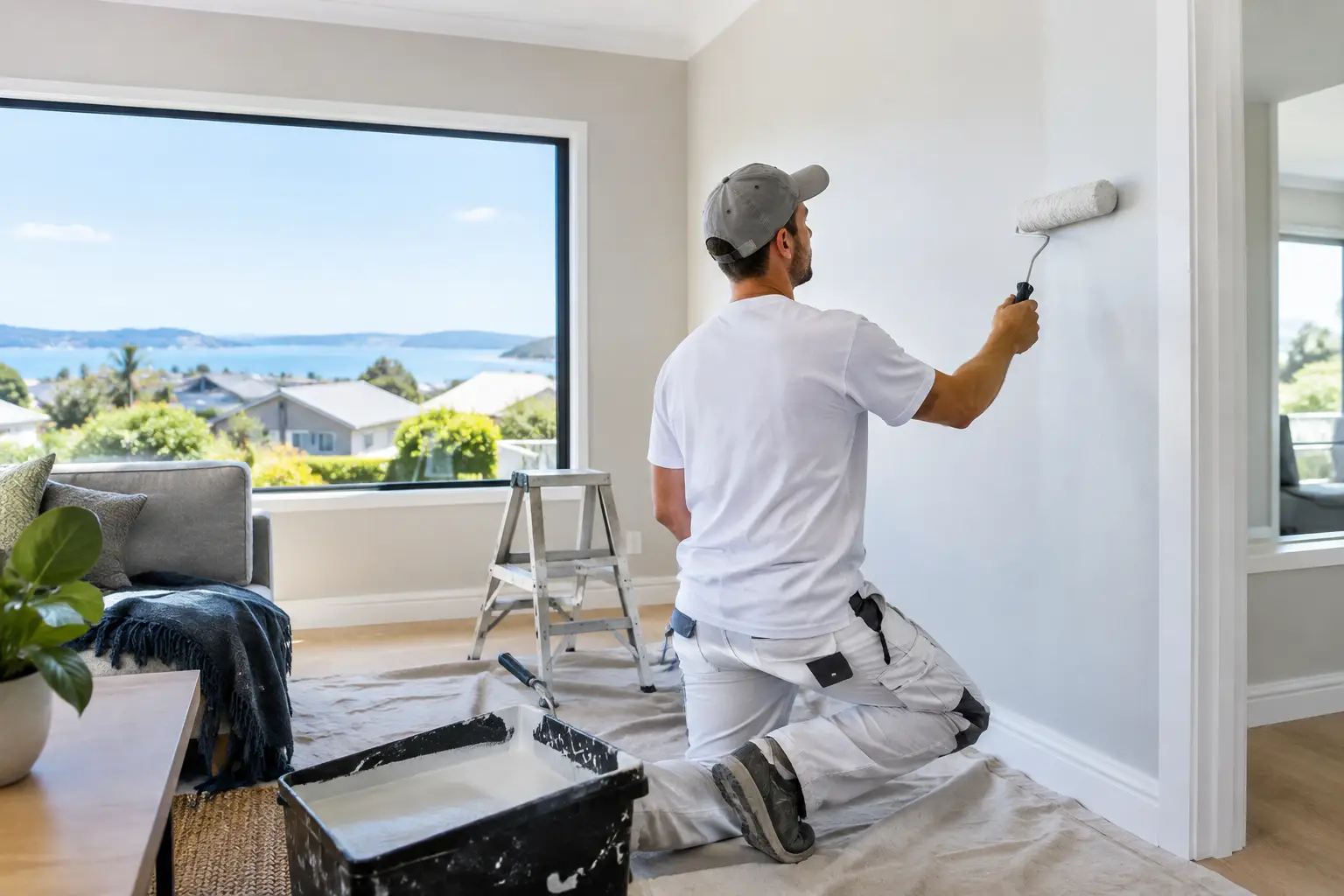
A small bedroom and a large open-plan living area may both be described as “one room”, but they are not comparable painting jobs. That is why interior house painting cost per room nz searches can produce confusing answers. A sensible budget starts with what is actually being painted, the condition of the surfaces and whether the room can be completed efficiently as part of a wider project.
For most homeowners, a per-room figure is useful as a planning question, not a fixed price. Professional painters quote a scope of work. They look at walls, ceilings, trims, doors, window reveals, access, furniture and preparation before confirming a price. Two rooms with the same floor area can require very different amounts of labour.
Why painting costs are rarely truly “per room”
A painter does not only paint the floor area of a room. Wall height, the number of windows and doors, built-in cabinetry, detailed trim and the ceiling all change the paintable surface. So does the time required to protect flooring, move or cover furniture, fill imperfections and clean down surfaces.
There are also project costs that do not disappear just because you paint one room. Setting up, masking, protecting adjacent areas and cleaning up take time. When several rooms are completed in one visit, those tasks can be spread across the project. A single-room job can therefore feel disproportionately expensive compared with its size.
This is why an online estimate or a contractor’s quote should be read as a scope, rather than reduced to a simple room count. It gives you a clearer way to compare like with like.
What changes the interior house painting cost per room in NZ?
Room size and ceiling height
Larger rooms generally have more wall and ceiling area, but height matters just as much. A room with a high stud needs more surface coverage and may require different access equipment. Stairwells, voids and sloping ceilings can add complexity even where the floor area seems modest.
Open-plan spaces are another common source of confusion. They can be one connected living area, yet include multiple ceiling planes, bulkheads, wide openings and extensive trim. Treating them as a single standard room can understate the work involved.
What is included in the paint scope
Ask whether the price includes walls only or the full interior finish. A full scope may include ceilings, skirtings, doors, architraves and window reveals as well as walls. Each component has a different preparation and painting process.
Window joinery is particularly worth checking. PaintEstimate’s whole-interior assumptions use aluminium windows. Timber windows are a separate selection because painting the interior side of timber joinery adds work and needs to be allowed for properly.
The number of colours also matters. A single wall colour is usually more straightforward than separate ceiling, wall, trim and feature-wall colours. Colour changes can mean more cutting in, more masking and more careful sequencing, especially where sharp lines are visible.
Preparation is often the deciding factor
A room in good condition can be refreshed relatively efficiently. A room with peeling coatings, stains, dents, old adhesive, cracking, smoke residue or poorly repaired plaster needs a different level of attention.
Preparation is not an optional extra that can simply be removed to make a quote cheaper. It affects how the finished paintwork looks and how well it performs. The right approach depends on the existing surface and paint system, so the condition should be discussed honestly when requesting an estimate or on-site quote.
If a home may contain older coatings or materials that need special handling, tell the painter before work begins. They can assess the situation and plan the work appropriately rather than discovering a complication after the project has started.
Occupied rooms take longer to protect
Painting an empty room is different from painting around beds, bookcases, curtains, electronics and personal belongings. Most painters will protect fixed items and work areas, but homeowners can often make the job easier by clearing small, fragile and valuable items in advance.
That does not mean moving heavy furniture without agreement. Ask the contractor what they expect you to do before the start date, what they will move or cover, and whether rooms need to be vacant. Clear expectations prevent delays and make it easier to compare quotes fairly.
Use whole-home figures as a benchmark, not a room-rate formula
When several rooms need attention, whole-interior pricing is often more useful than trying to add up individual room allowances. It captures the efficiency of completing connected spaces under one organised scope.
As an indicative PaintEstimate guide, a whole interior in good condition with ceilings up to 2.7 metres and aluminium windows is estimated at NZ$6,000–7,200 for an 80m² floor area, excluding GST. For 120m², the indicative estimate is NZ$9,000–10,800, also excluding GST.
These are not fixed quotations or universal New Zealand prices. The stated whole-interior scope includes ceilings, walls, skirtings, doors, architraves and window reveals. Your property may need a different allowance because of its layout, condition, ceiling height, joinery or the work you choose to include.
The key point is that these figures should not be divided by a number of rooms to create a per-room price. A four-bedroom home might have several compact bedrooms, a large living space, hallways, bathrooms and detailed trim. Another home with the same floor area can have a completely different room layout and level of preparation.
How to get a useful estimate before approaching painters
Start by deciding which rooms are genuinely in scope. You may want a full refresh before moving in, or only the living areas, bedrooms and hallway. Be clear about whether ceilings and trims are part of the project, because “walls only” is not the same job as repainting a complete room.
Next, note anything that could affect preparation: visible cracking, holes from removed fixtures, water marks, peeling paint, wallpaper residue or areas that have been patched. Photos are helpful when you later request a quote, but they do not replace an on-site assessment where the painter needs one.
It also helps to separate priorities. If you are working to a budget, you might paint the most-used rooms first and schedule lower-priority spaces later. This can be practical, although splitting work into separate visits may cost more overall than completing the same rooms together. The right choice depends on cash flow, timing and how disruptive the work will be.
PaintEstimate.co.nz can provide a quick, indicative starting point for a broader interior project without requiring contact details. Use the result to frame your budget, then request detailed quotations when you are ready.
Questions that make quotes easier to compare
When reviewing quotations, do not focus only on the bottom line. Check that each painter has priced the same rooms and the same surfaces. One quote may include ceilings and doors while another includes walls only, making a direct comparison misleading.
Ask how preparation has been allowed for, what paint system is proposed, how many coats are included and whether the price excludes GST. Confirm any assumptions around furniture, access, repairs and timber window joinery. If something is unclear, ask for it to be written into the scope before accepting the quote.
A lower price is not automatically a poor choice, and a higher price is not automatically better. What matters is whether the scope is clear, the preparation matches the room condition and you understand what could change the final cost.
A clearer way to plan room-by-room painting
Room-by-room planning is useful when it helps you decide what to paint first. It becomes less useful when it turns into an artificial fixed rate that overlooks the work behind a durable finish. Start with the rooms, surfaces and condition you have, then use an indicative whole-project estimate and clear quote scope to make your next decision with confidence.
Continue Learning
How Paint Estimate Works
How our free calculator turns your property details into a realistic New Zealand painting price range.
Understanding Painting Quotes
What's included in a painter's quote, how to compare quotes fairly and which questions to ask.
Preparation, Paint Systems & Warranties
Why preparation matters, how paint systems are specified and what a painting warranty actually covers.