Why Exterior Timber Requires Regular Maintenance
Exterior timber is constantly expanding and contracting as weather conditions change. Rain increases moisture content, while sunlight and heat dry the timber again. Over time this natural movement places stress on protective coatings.
Moisture can also encourage mould, mildew, algae and lichen growth, particularly in shaded or damp areas. Dirt, leaves and organic debris trap moisture against the timber and may accelerate deterioration if left untreated.
Regular maintenance helps protect timber from unnecessary damage while reducing the likelihood of larger repairs in the future.
Keeping exterior timber clean, addressing minor defects early and maintaining protective coatings are generally more cost-effective than allowing surfaces to deteriorate before carrying out restoration work.
Preparing Timber Surfaces
Preparation is one of the most important parts of any exterior painting or staining project.
Regardless of whether timber will be painted or stained, the surface should first be cleaned, inspected and prepared according to its condition. Even premium coating systems cannot achieve their full performance if they are applied over contaminated, unstable or deteriorated surfaces.
Preparation may include:
- removing dirt, dust and organic debris;
- treating mould, mildew, algae or lichen;
- pressure washing or soft washing where appropriate;
- sanding weathered timber;
- replacing damaged boards;
- securing loose nails or screws;
- filling minor defects where suitable;
- spot priming bare timber before painting.
The level of preparation varies from one project to another depending on the age of the timber, previous coatings and overall condition of the surface.
Investing time in proper preparation helps coatings adhere correctly, improves the final appearance and contributes to a longer-lasting finish.
Paint or Stain?
One of the most common questions homeowners ask is whether exterior timber should be painted or stained.
Both systems provide protection, but they work in different ways and produce different finishes.
Wood stain penetrates into the timber rather than forming a thick film over the surface. This allows the natural timber grain to remain visible while providing protection against weather exposure. Because stain gradually weathers over time instead of peeling, ongoing maintenance often involves cleaning the surface and applying another maintenance coat.
Paint forms a protective coating over the surface of the timber, creating a solid colour finish. It provides excellent coverage and can improve the appearance of older timber by hiding cosmetic imperfections and variations in the surface.
Both systems can provide long-term protection when applied correctly using suitable preparation and quality products.
The most appropriate option depends on several factors, including:
- the condition of the timber;
- any existing coatings;
- the desired appearance;
- the expected level of maintenance;
- the manufacturer’s recommendations.
There is no universal solution that suits every project. The most suitable coating system depends on the individual property and the condition of the timber.
Deck Considerations
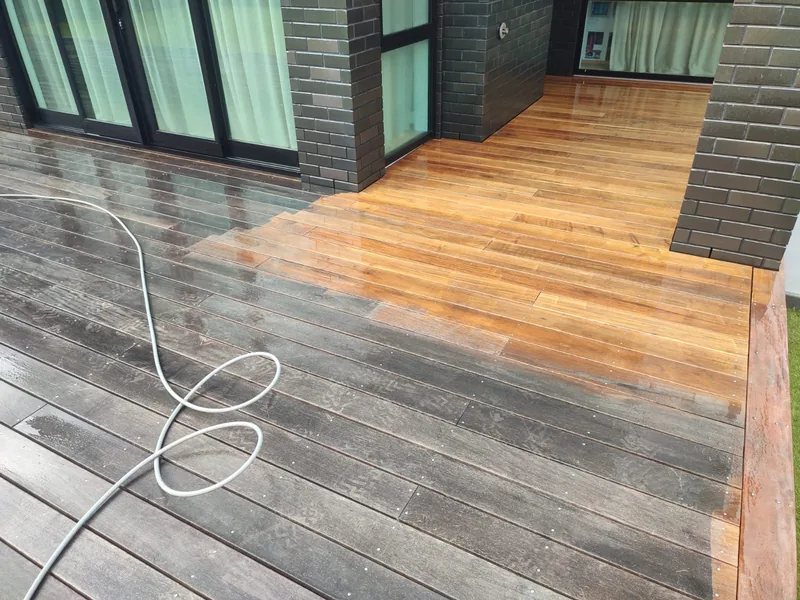
Decks experience some of the harshest conditions around a property.
Unlike walls or fences, decks are horizontal surfaces that collect rainwater, dirt, leaves and other organic debris. They are also subjected to regular foot traffic, outdoor furniture and everyday use, all of which contribute to faster wear of the protective coating.
Because moisture remains on horizontal surfaces for longer periods, decks often require more frequent maintenance than other exterior timber structures.
When planning a deck painting or staining project, it is important to consider:
- the overall condition of the timber;
- whether the deck has previously been painted or stained;
- the amount of direct sunlight the deck receives;
- drainage and areas where water may collect;
- the amount of daily foot traffic;
- whether individual boards require repair or replacement.
Routine cleaning helps reduce the build-up of dirt, mould and organic material that may shorten the life of the coating.
Fence Considerations
Although fences experience very little physical wear, they remain exposed to weather throughout the year.
Unlike decks, fences are exposed on both sides, meaning moisture, sunlight and changing weather conditions affect the entire structure. Long boundary fences may also have vegetation growing against them, creating damp areas where mould and mildew can develop more easily.
When assessing a fence for painting or staining, factors commonly considered include:
- the condition of the timber;
- previous paint or stain coatings;
- access to both sides of the fence;
- surrounding gardens and landscaping;
- loose palings or structural repairs;
- areas affected by mould or moisture.
Well-maintained fences often require less frequent recoating than decks because they are not subjected to constant foot traffic or standing water.
What Affects the Cost?
No two projects are exactly the same. While size is an important factor, the total cost of painting or staining exterior timber depends on a combination of preparation requirements, access and the overall condition of the surfaces.
Decks
The cost of painting or staining a deck may be influenced by:
- total deck area;
- timber condition;
- previous coatings;
- the amount of preparation required;
- stairs and handrails;
- accessibility;
- whether the deck will be painted or stained.
Older decks that require extensive preparation generally take longer to complete than newer, well-maintained timber.
Fences
Fence painting and staining costs commonly depend on:
- total fence length and height;
- condition of the timber;
- previous coatings;
- access to one or both sides;
- surrounding vegetation;
- preparation requirements;
- whether painting or staining is selected.
Long boundary fences often benefit from economies of scale, while smaller fencing projects may have a higher cost per metre because preparation and setup time remain similar regardless of project size.
Every property is different, which is why professional quotations are based on the actual condition of the timber rather than measurements alone.
Ongoing Maintenance
Regular maintenance helps maximise the life of both painted and stained timber.
The expected maintenance interval varies depending on:
- the coating system used;
- exposure to sunlight;
- rainfall and moisture;
- timber movement;
- surrounding vegetation;
- routine cleaning;
- foot traffic in the case of decks.
Rather than waiting for coatings to fail completely, many homeowners achieve better long-term results by carrying out maintenance when early signs of wear first appear.
Cleaning exterior timber periodically, removing mould before it spreads and repairing small areas of damage can significantly reduce future maintenance costs.
Decks generally require more frequent maintenance because horizontal surfaces experience heavier wear and retain moisture for longer periods.
Fences typically experience less physical wear, but regular inspections and cleaning remain important for preserving both the timber and its protective coating.
Tips for Homeowners
Simple routine maintenance can significantly extend the life of exterior timber coatings.
Homeowners can help protect painted or stained timber by:
- keeping surfaces free from leaves, dirt and organic debris;
- washing mould, mildew and algae before they become established;
- avoiding prolonged moisture build-up where possible;
- inspecting coatings annually for early signs of deterioration;
- repairing small failures before they become larger problems;
- trimming vegetation growing against fences;
- keeping deck surfaces clean, particularly in shaded areas.
Preventative maintenance is usually more economical than allowing the coating system to deteriorate to the point where complete restoration becomes necessary.